Carleton Biologists Uncover Hidden Link Between Environmental Pollutants and Type 2 Diabetes
By Brier Cook
Scientists in Carleton’s Department of Biology Bruin Lab, in collaboration with researchers at the University of Ottawa Heart Institute, the University of Alberta and the University of British Columbia, have found that persistent chemical pollutants accumulate in the pancreas, offering new insight into how environmental exposures may contribute to type 2 diabetes.
The results, published in Nature Communications, could help inform future chemical safety assessments and diabetes research.
Linking Pollutants and the Increase in Diabetes
The idea of measuring pollutants in the pancreas is novel. Historically, regulators have evaluated the health risks of environmental pollutants by examining their associations with diseases such as cancer and reproductive disorders. Metabolic diseases like type 2 diabetes have only recently emerged in toxicology, meaning they haven’t traditionally been considered when assessing chemical safety.
About 3.9 million Canadians live with diagnosed diabetes. Type 2 diabetes, the chronic condition that occurs when the body cannot use insulin properly or when the pancreas no longer makes enough insulin, accounts for about 90 to 95 per cent of all diagnosed cases. The number of Canadians living with diagnosed type 1 and type 2 diabetes is projected to increase by 32 per cent between 2024 and 2034.

“Our findings show that metabolic health needs to be considered an important endpoint when regulators assess chemical safety,” said Dr. Jenny Bruin, associate professor and Canada Research Chair in Human Metabolic Diseases in the Department of Biology and the Institute of Biochemistry. “Especially when you consider the growing number of people with diabetes around the world, the vast complications associated with the disease, and its role as a risk factor for other conditions.”
The Multi-Year Effort Behind the Discovery
Researchers in the Bruin Lab, including Dr. Bruin, PhD student Angela Ching, and research associate Dr. Myriam Hoyeck, started investigating whether environmental pollutants accumulate in human pancreas tissue in 2019.
Through a collaboration with the Alberta Diabetes Institute’s IsletCore, it took the group four years to build a cohort of 30 human donors. For each donor, the team measured three different classes of lipophilic – or “fat-loving” – pollutants that bioaccumulate in the food chain and live in fatty tissues.
The pollutants they measured included dioxins, unwanted by-products of industrial processes like paper-milling, PCBs, chemicals once used as industrial coolants and electrical insulators, and organochlorine pesticides, which can persist in soil and water for years. All three classes of pollutants have been banned for several decades.
The team suspected they might detect the pollutants in the pancreas but assumed they would be present in lower concentrations than in fat tissues due to the properties of these chemicals. Instead, they found similar levels in the pancreatic and fat tissues, a concerning discovery given the pancreas’s important role in regulating blood sugar.
Their presence in the pancreas suggests that these long-banned pollutants continue to persist in the environment and both affect, and impair, human biology.
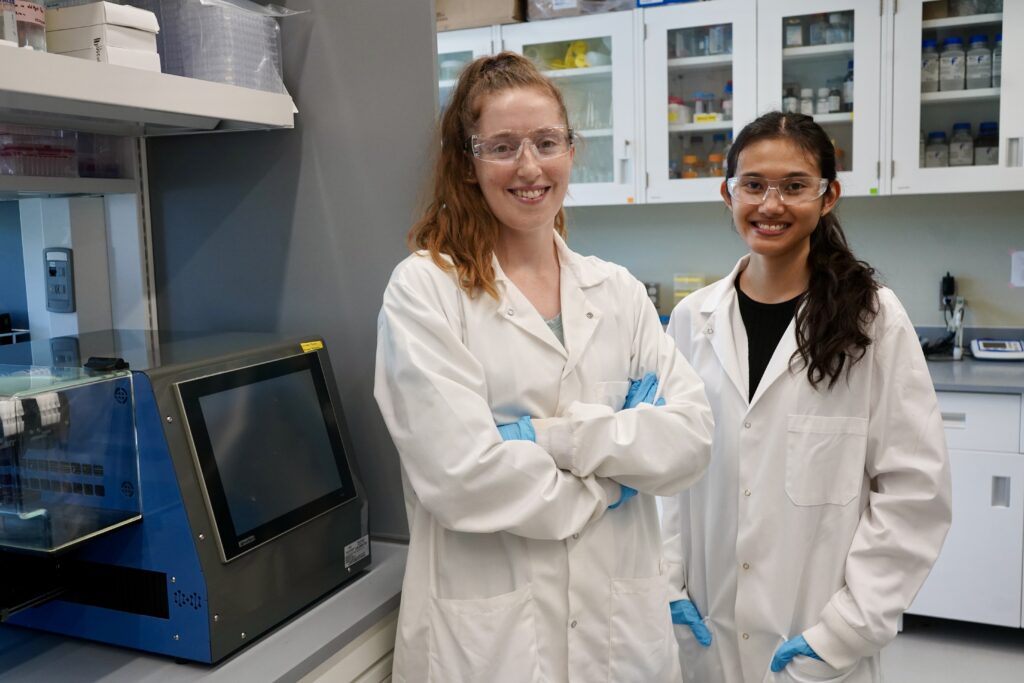
“We knew from the get-go that the results would be interesting, informative, and worth pursuing,” said Dr. Hoyeck.
Once the team confirmed that pollutants were present in human donor pancreas tissue, they examined other donor characteristics like body mass index (BMI) and found that pollutant levels were associated with other diabetes risk factors, as well as age.
Researchers in the Bruin Lab and at two other Canadian universities measured insulin secretion by cells isolated from each human donor pancreas. Despite variations in the method used to assess insulin secretion, the results were consistent. Across all three sites, higher pollutant levels in the pancreas were associated with worsened insulin secretion.
“It took a long time to appreciate that these pollutants live in the environment for decades and get passed down the food chain,” said Dr. Bruin. “That persistence is a huge concern.”
Securing the Equipment to Make It Possible
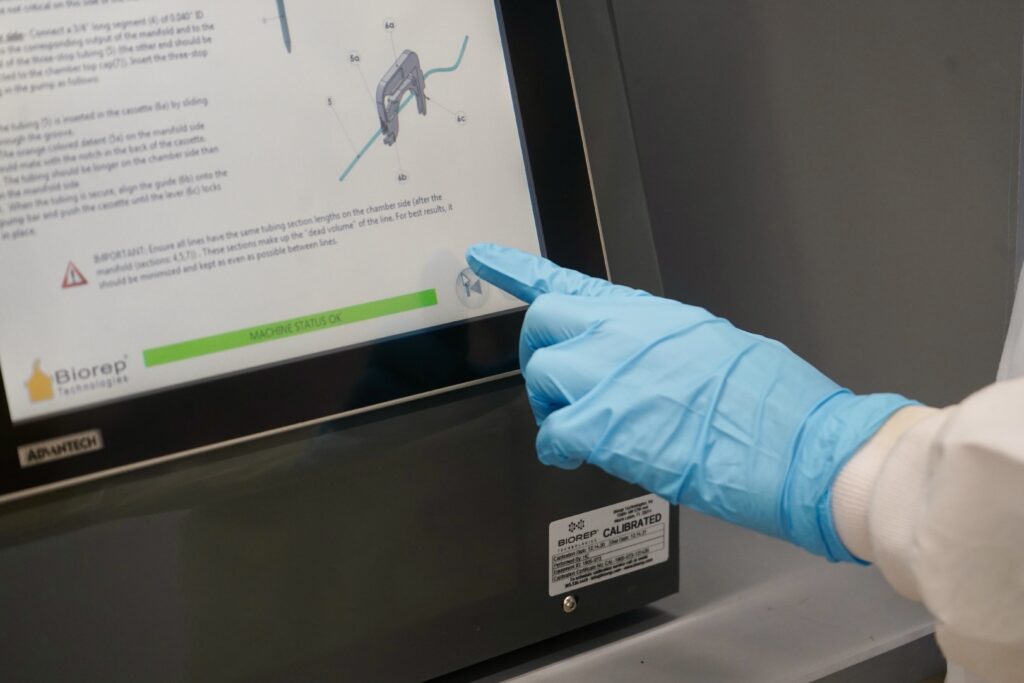
This research was made possible, in part, by the acquisition of an in-house perifusion machine: a specialized laboratory instrument that measures how insulin-producing cells respond to changing conditions in real time.
During the COVID-19 pandemic, obtaining regular, timely access to a perifusion machine quickly became one of the team’s biggest challenges. Transporting human donor cells, a process that was already rare and time-sensitive, added significant logistical hurdles.
“Before we could accept a donor, we had to make sure the equipment was available,” said Dr. Hoyeck. “Because it was COVID, we had to work around restrictions and make sure we weren’t interfering with anyone else’s research.”
When the Dean of Science asked faculty how the university could support their research during the pandemic, Dr. Bruin had an unconventional request: to purchase a perifusion machine that would allow her lab to analyze their samples on campus.
With the new machine, the team could accept donor cells regularly and streamline the process.
“This level of work wouldn’t have been possible without the perifusion instrument,” said Dr. Bruin. “It played a huge role in reducing the number of barriers to us accepting donors and moving the project forward.”
What’s Next
The study marks the beginning of an exciting new line of research for the Bruin Lab, which includes analyzing tissue from an additional approximately 250 human donors.
Future research will aim to determine whether newer, less regulated chemicals like PFAS, synthetic “forever chemicals” that have been used in everyday products since the 1940s, may also increase the risk of developing metabolic diseases such as type 2 diabetes.
“These types of projects are particularly impactful and have a direct link to human health,” said Ching. “We don’t fully have control over what we’re exposed to, and we need the people in charge to be more accountable. Tighter regulations will benefit everyone.”
-End-