Dr. Peter Crockford, Department of Earth Sciences
Eureka! Faculty Spotlight
Reading Earth’s Storybook
Long before humans walked the Earth, our planet resembled an alien land. Dr. Peter Crockford, Associate Professor in Carleton’s Department of Earth Sciences, studies Earth’s ancient landscapes and oceans to understand how life, ice, and oxygen shaped the planet.
Being a geochemist, Dr. Crockford says, is one of the coolest areas of science to explore. Studying rocks allows him to ask fundamental questions: how did life evolve, and how did changes in organisms reshape the planet?
Like human history, sedimentary rocks offer a window into the past. Drawing on a metaphor popularized by his mentor, geobiologist Andy Knoll, Crockford explains that layers of rock are like pages in a book, recording Earth’s history with one hand while eroding and erasing it with another.
Dr. Crockford’s research focuses on uncovering this long history by diving into specific events like global glaciations – extended periods of ice – to understand how Earth has changed over time.
Over the past decade, his research has quantified how productive Earth’s biosphere has been throughout history. By studying plants on land, and algae and cyanobacteria in the oceans, he can estimate how much life has existed at different periods in Earth’s past.
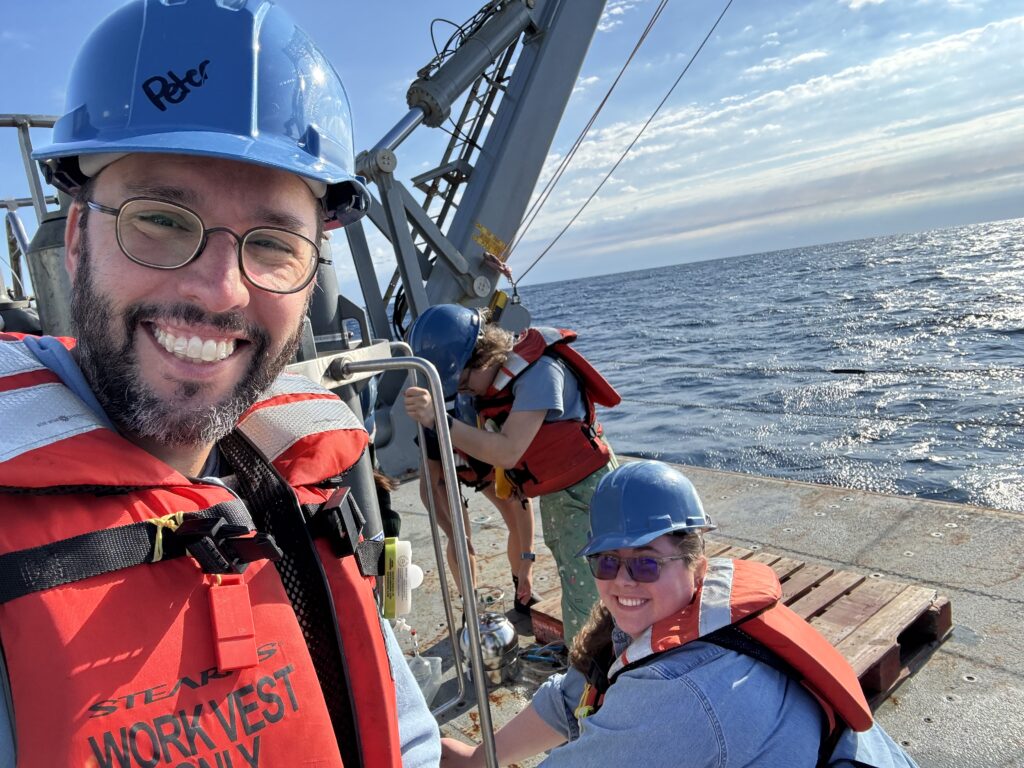
He also investigates why megafauna – species like caribou, and wolverine – survived the last glaciation while others did not, and how Earth’s atmosphere first built-up oxygen 2.5 billion years ago, transforming the planet’s surface. Through his research, current students gain hands-on skills while contributing to discoveries about our planet’s history.
Awards and Mentorship
Dr. Crockford’s research has been recognized with several major awards, including his appointment as a CIFAR Azrieli Global Scholar and a 2025 Sloan Research Fellowship, distinctions that highlight immense impact and prestige in his field.
These awards have allowed him to expand his lab’s capacity and recruit top North American talent. “CIFAR funding encourages projects that are truly interdisciplinary,” he says. “It’s an opportunity to broaden my horizons with people completely outside of my field while finding interesting areas of overlap.”
Mentorship has played a pivotal role in Dr. Crockford’s own academic journey. His nomination for the Sloan Research Fellowship came from Dr. Paul Hoffman, retired Sturgis Hooper Professor of Geology Emeritus at Harvard and one of Dr. Crockford’s earliest mentors. He credits Dr. Hoffman for giving him the confidence to pursue a career as an Earth Scientist during his early research days.
Now, Dr. Crockford brings that same mentorship philosophy to his own lab by encouraging students to apply their own interdisciplinary approaches to big questions.
Hands-On Real World Science
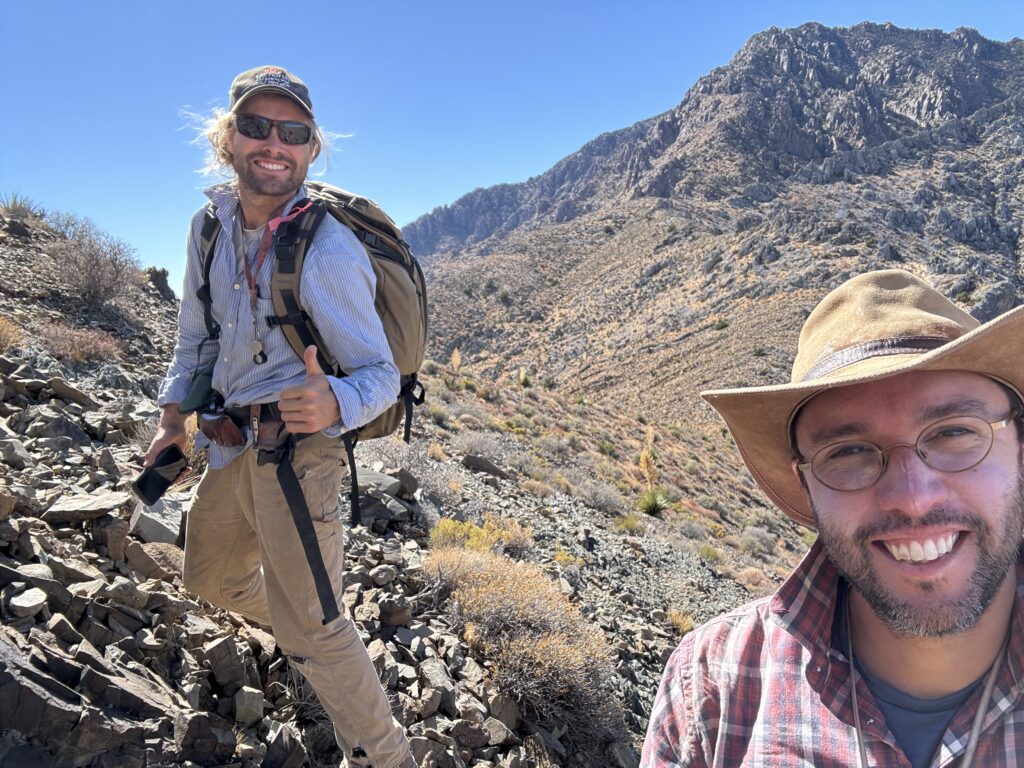
Studying Earth Sciences trains students to tackle real-world environmental challenges, from resource extraction to urban sustainability. By integrating geology with land use, microbes, wildlife, and climate, students learn to make sense of complex data sets and can pursue a wide range of career paths.
Exploring Earth’s history also reveals the planet’s extremes, offering valuable insight into changes in our oceans, landscapes, and climate. Studying rocks show us how Earth responded to past periods of high CO₂, which scientists can use to make informed predictions about the planet’s future.
Finding Your Fit in Carleton Science
It’s okay if your path isn’t set from the start. Dr. Crockford began his education interested in medicine but shifted to chemistry. A co-op at a forensic equine lab – which involved processing hundreds of litres of horse urine each week – helped him realize what he didn’t want to pursue and confirmed that he wanted to spend more time outdoors.
Through friends, he discovered Earth Sciences and fell in love with combining technical lab skills with his passion for the natural world.
“Studying earth’s history is the closest you get to going to another planet or walking across ancient, seemingly alien landscapes,” he explains. “You get to piece together clues such as the composition, atmosphere, seawater, chemistry, and life that existed, it’s a very intellectually stimulating problem to solve.”
The program’s location in the nation’s capital also offers access to top-notch research infrastructure. Dr. Crockford emphasizes that students in the Department of Earth Sciences are equally as supportive and impressive, creating a strong collaborative environment.
Carleton’s Earth Sciences program lets students explore the planet’s past while preparing for the challenges of tomorrow.
“Earth Sciences is a diverse field that can lead to work in municipalities, agriculture, resource extraction, and environmental fields,” says Dr. Crockford. “Find what excites you and choose courses that align with your interests.”
Ready to explore Earth’s deep history? Learn more about Carleton’s Department of Earth Sciences.
-End-