From the Classroom to Vaccine Manufacturing
Eureka! International Student Spotlight: Elbaraa Abdelsadek
Nanotechnology focuses on manipulating matter at the atomic scale. Originally from Egypt, fourth-year chemistry student Elbaraa Abdelsadek chose Carleton with a clear goal in mind: to specialize in nanotechnology from day one.
Drawn to the program’s interdisciplinary focus and Canada’s strong research ecosystem, Elbaraa has made the most of his time at Carleton through student involvement and hands-on industry experience. We caught up with Elbaraa to talk about his academic journey and plans for the future.
Hi Elbaraa! What drew you to Carleton’s nanotechnology program?
I’ve loved science since I was a kid. It was challenging for me to choose a major because I was also interested in math, physics, and engineering. I learned about nanotechnology through a casual conversation with my dad’s friend and was intrigued. When I began reading about it, I learned that it combined everything I enjoyed into one field.
I came to Carleton to study nanotechnology because I wanted to specialize in it from the beginning. Carleton was one of the only places in the world to offer me that experience at the undergraduate level. I knew that coming to Canada was a great idea because there’s a lot of research happening in the field.
What I enjoy most about the program is its multidisciplinary nature. I study physical chemistry, thermodynamics, quantum mechanics, math, physics, and chemistry, of course. What also excites me about nanotechnology is that it will allow me to solve real-world problems in a lot of areas, such as healthcare, electronics, advanced materials, and energy.
I find the multidisciplinary nature of my major useful because I know I’ll be able to apply it to every area of my work once I graduate.
How have you gotten involved during your time at Carleton?
Carleton has an active student life, and being part of that helped me build strong bonds and meaningful connections. I’ve been involved with multiple associations, including the Egyptian Student Association, the Carleton Science Student Society, and others.
All my involvement has helped me meet new people, which is especially important as an international student. My friends have become more like my family, which is the part of the university experience I’ve enjoyed the most. These experiences also helped me grow personally and professionally by improving my communication, leadership, and teamwork skills.
You recently completed a co-op placement in Toronto at Sanofi, a global research and development company that produces pharmaceuticals and vaccines. What was that like?
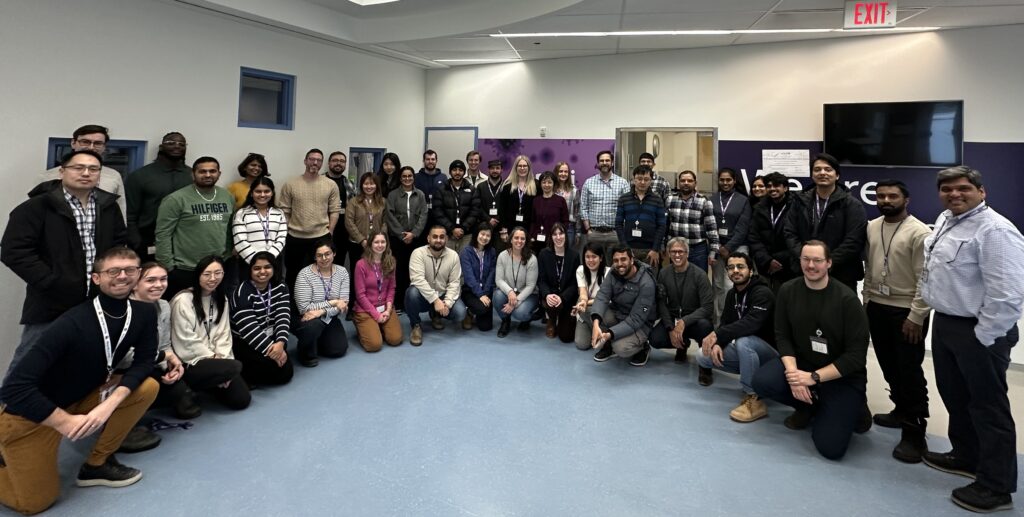
Working at the Toronto site was especially unique because it’s Canada’s only vaccine manufacturing facility. I worked in Manufacturing, Science, Analytics, and Technology (MSAT) department, supporting good manufacturing practices (GMP) by monitoring critical parameters, validating consistency, and helping ensure regulatory compliance for inspection agencies, such as Health Canada, the FDA, and other international authorities. Unlike a lot of co-op students who focus on a single stream, I was exposed to multiple vaccines across both upstream and downstream processes.
This experience gave me a much deeper understanding of large-scale manufacturing in general, and pharmaceutical and vaccine production in particular. It also showed me how scientific knowledge and theory are applied in real industrial and healthcare settings.
You’ve gained a lot of multidisciplinary experience so far. What do you think you would like to do upon graduation?
I’ll likely pursue a master’s degree and potentially a PhD in the future, but I also believe industry experience is extremely valuable. I would like to continue building experience after graduation before pursuing graduate studies, because I think working in industry provides me with a deep understanding of my field and can strengthen my scientific research by connecting theory to real-world applications. In the long term, I hope to contribute to scientific research and technological advancement in areas such as nanotechnology, advanced materials, and nanoelectronics.
What advice would you give to a high school student interested in pursuing chemistry, nanotechnology, or another scientific field?
Work experience is incredibly useful. I pursued co-op because I knew it was an investment in my future and would give me an idea about how science gets applied outside the classroom. Also, look for opportunities yourself, reach out to your professors, and don’t be afraid to connect with people in your industry in person or on platforms like LinkedIn.
Don’t be afraid to explore different areas of science and lean into the multidisciplinary nature of your program, whatever your field is. That can help you discover what genuinely interests you and where you want to make an impact in the future.
-End-